Wave field synthesis
A line of 128 speakers that places sound in the room
Can a line of small speakers put a sound in front of itself, out among the audience?
2024 – ongoing
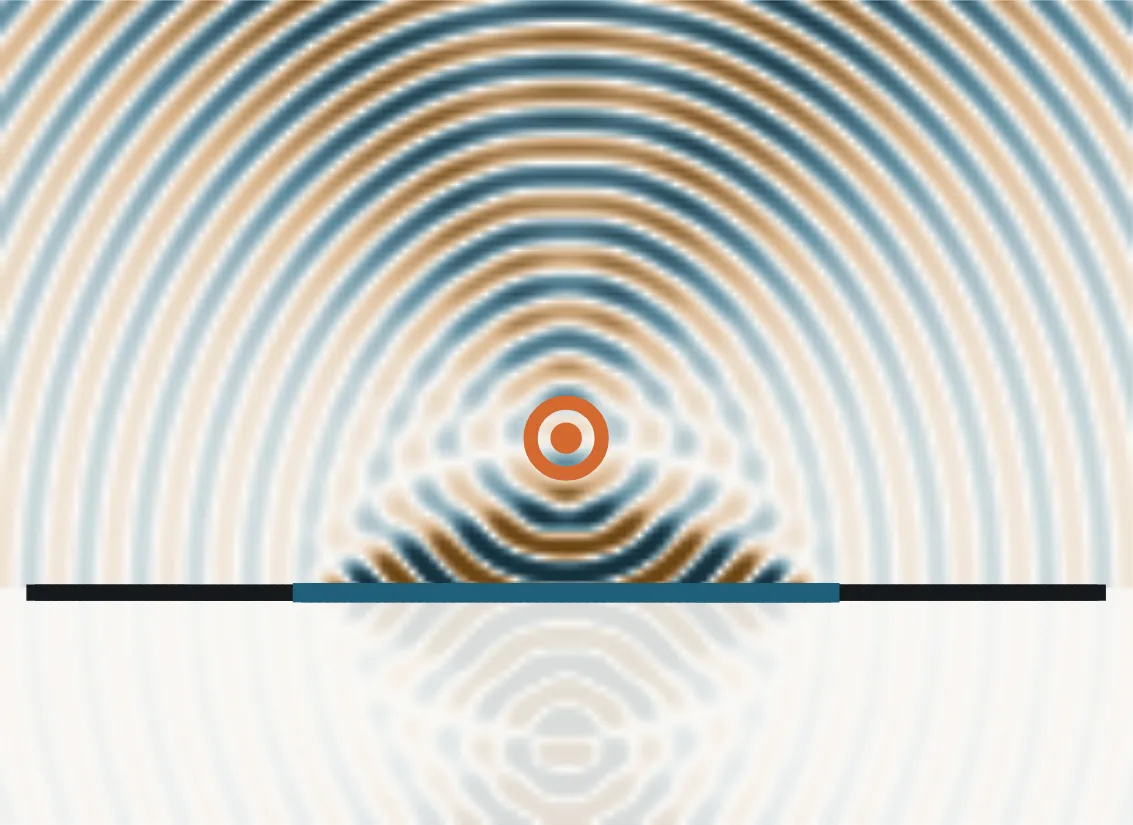
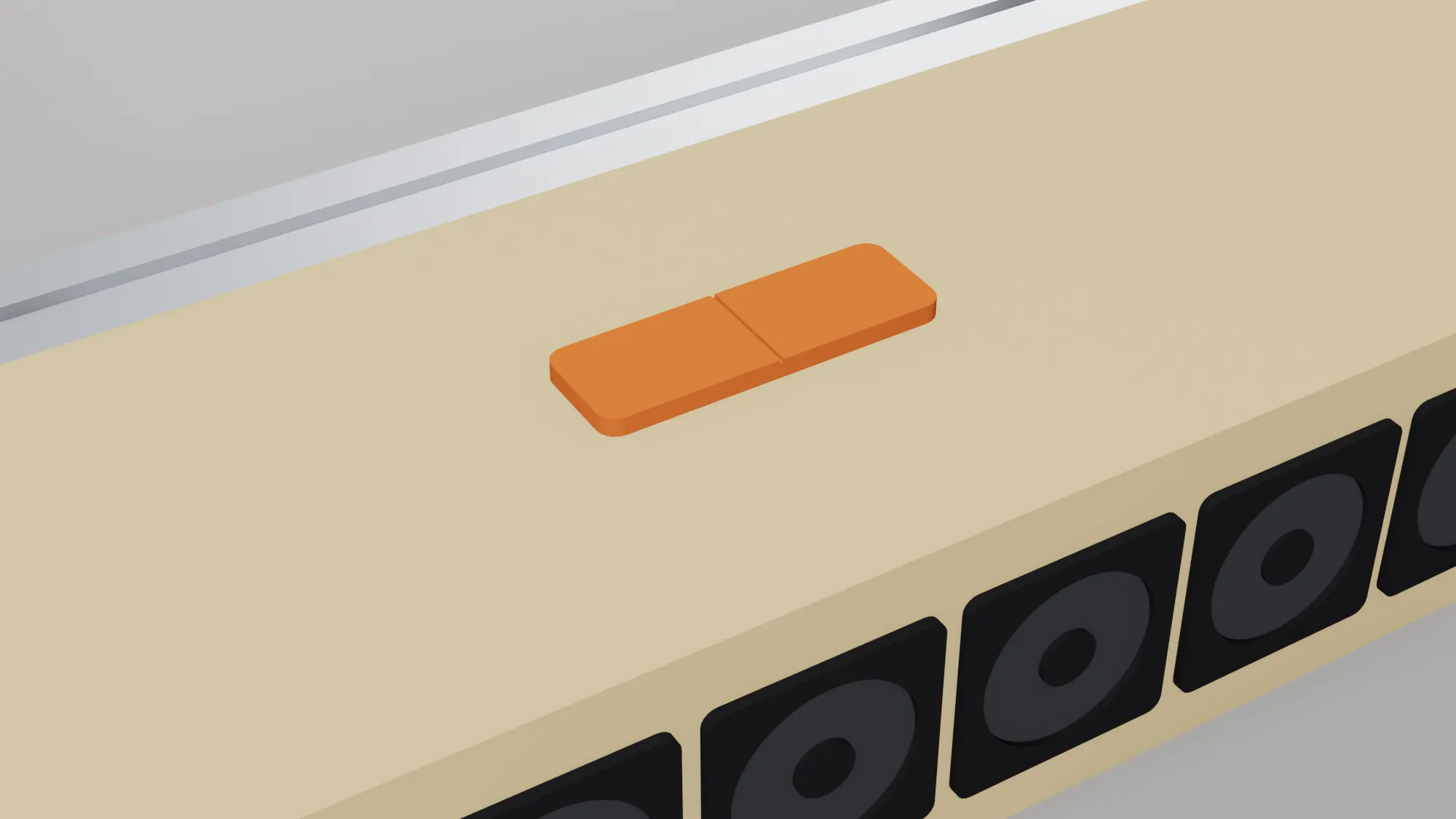
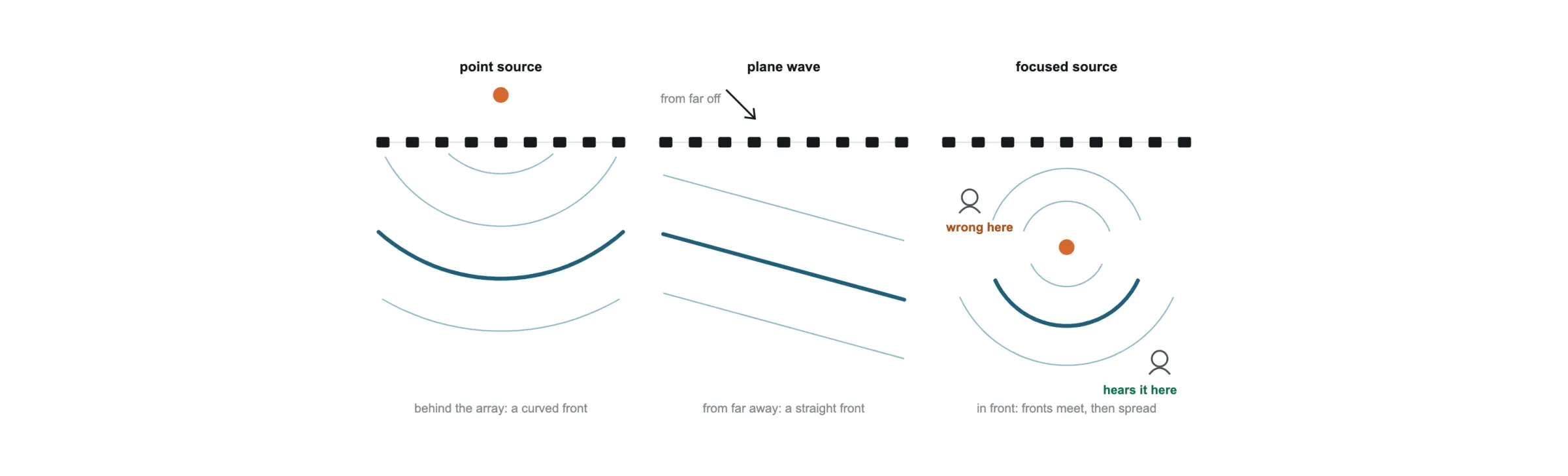
A line of 128 small loudspeakers, being built at the Precursor Lab at Simon Fraser University for wave field synthesis. Every speaker plays the same sound with its own delay and level, and together they rebuild the wavefront of a sound that is somewhere else: behind the line, far away, or in front of it, among the audience. Those last ones, focused sources, are what the array is for.
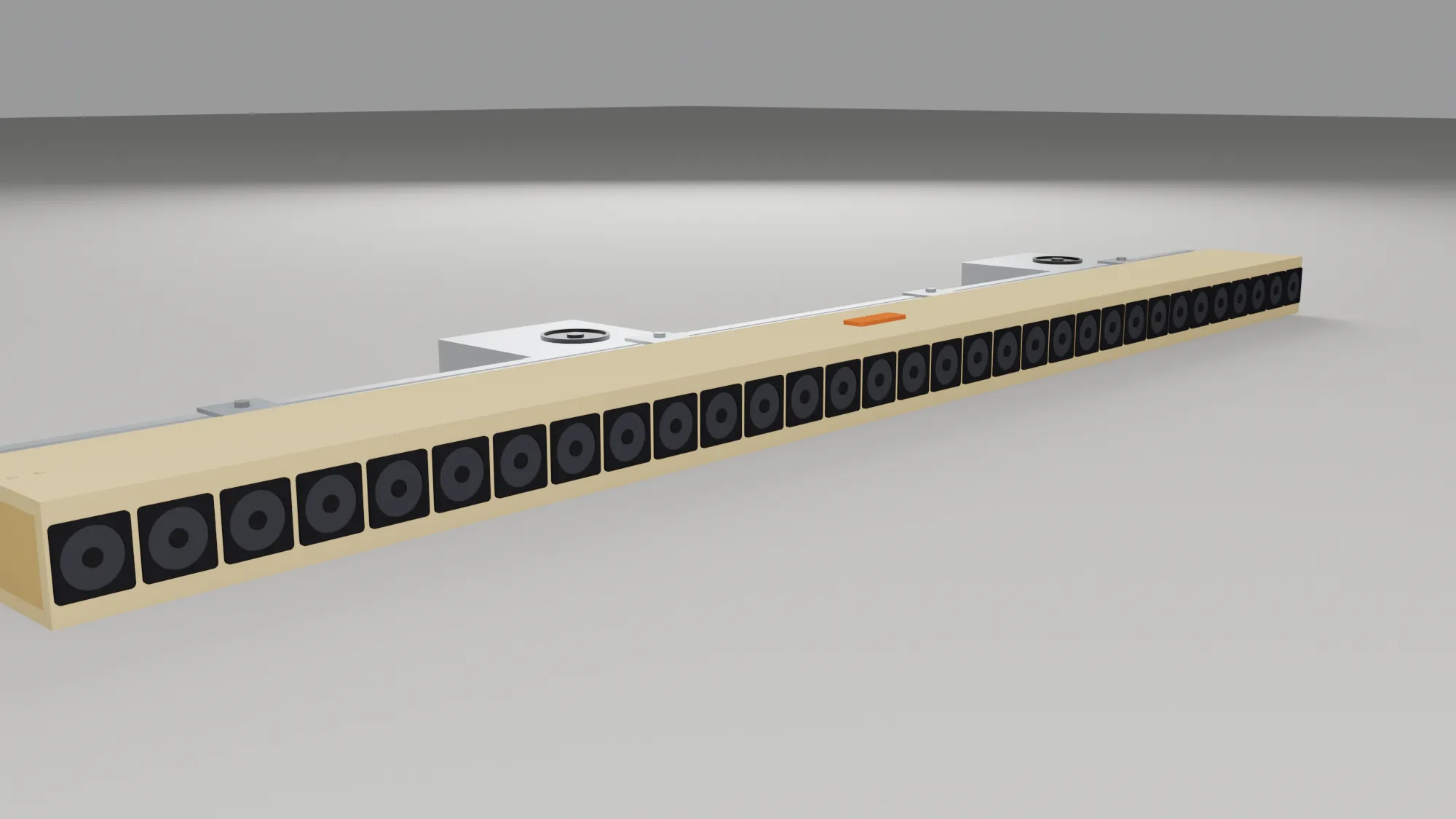
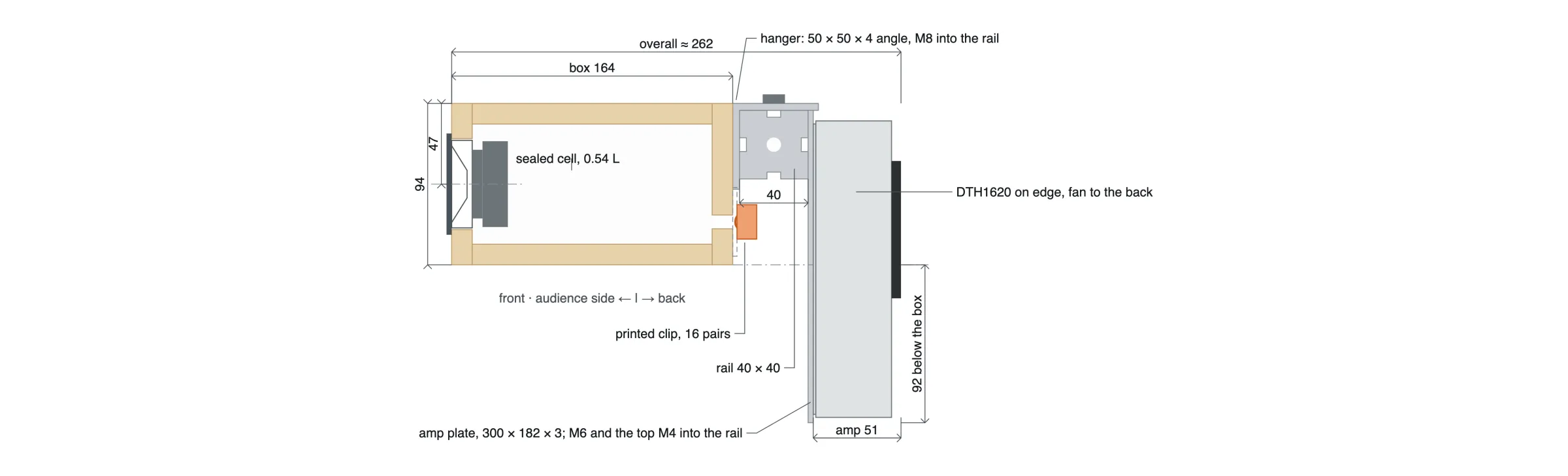
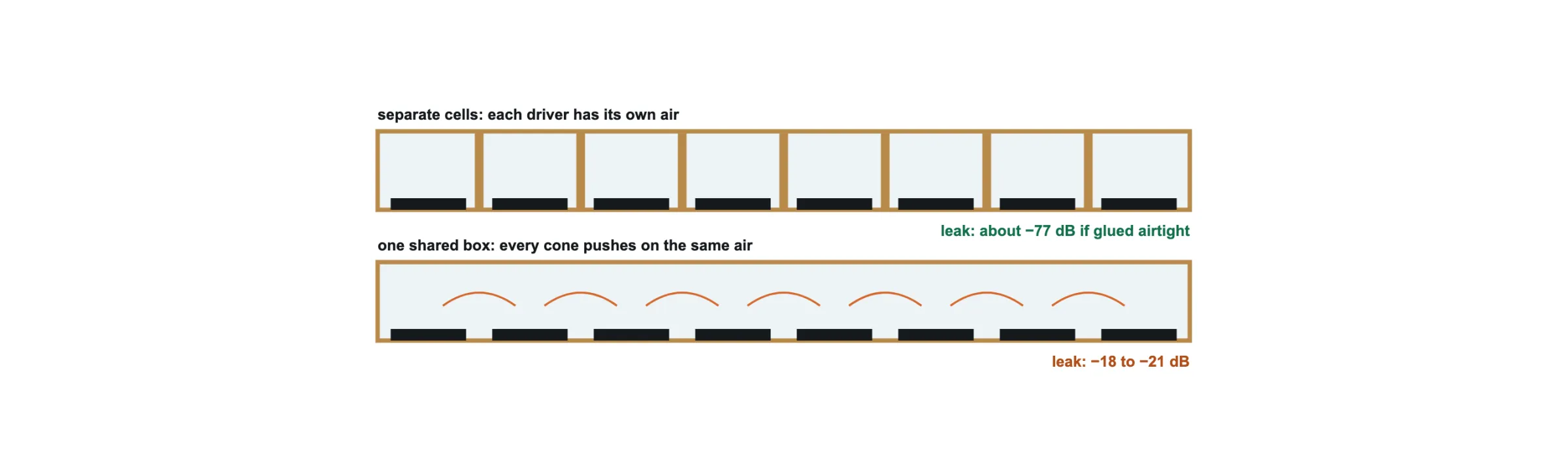
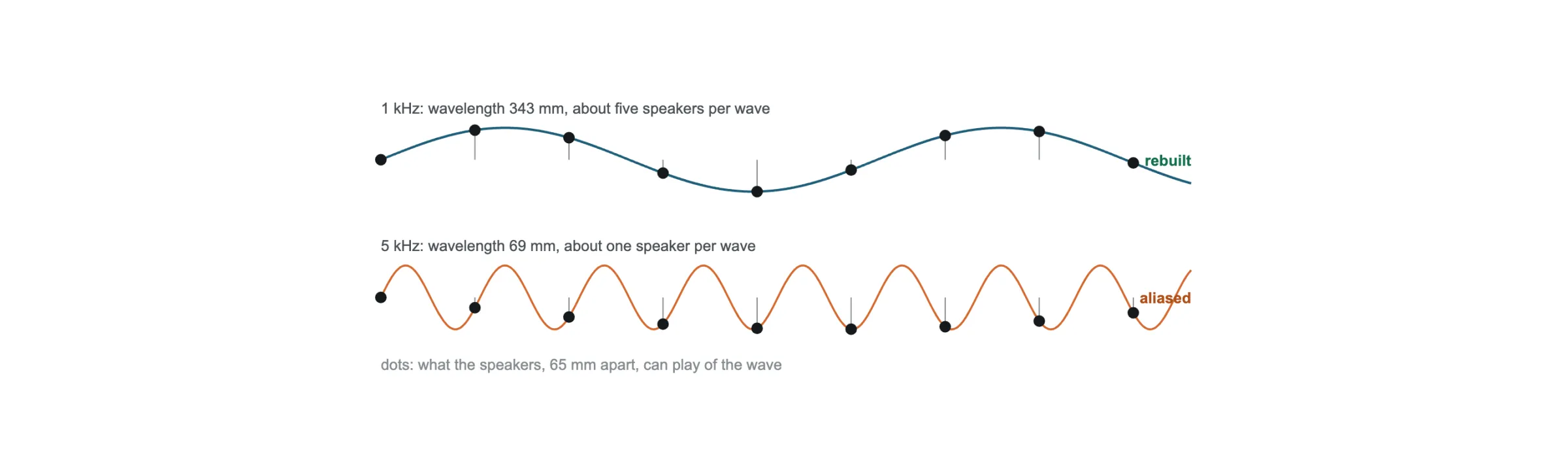
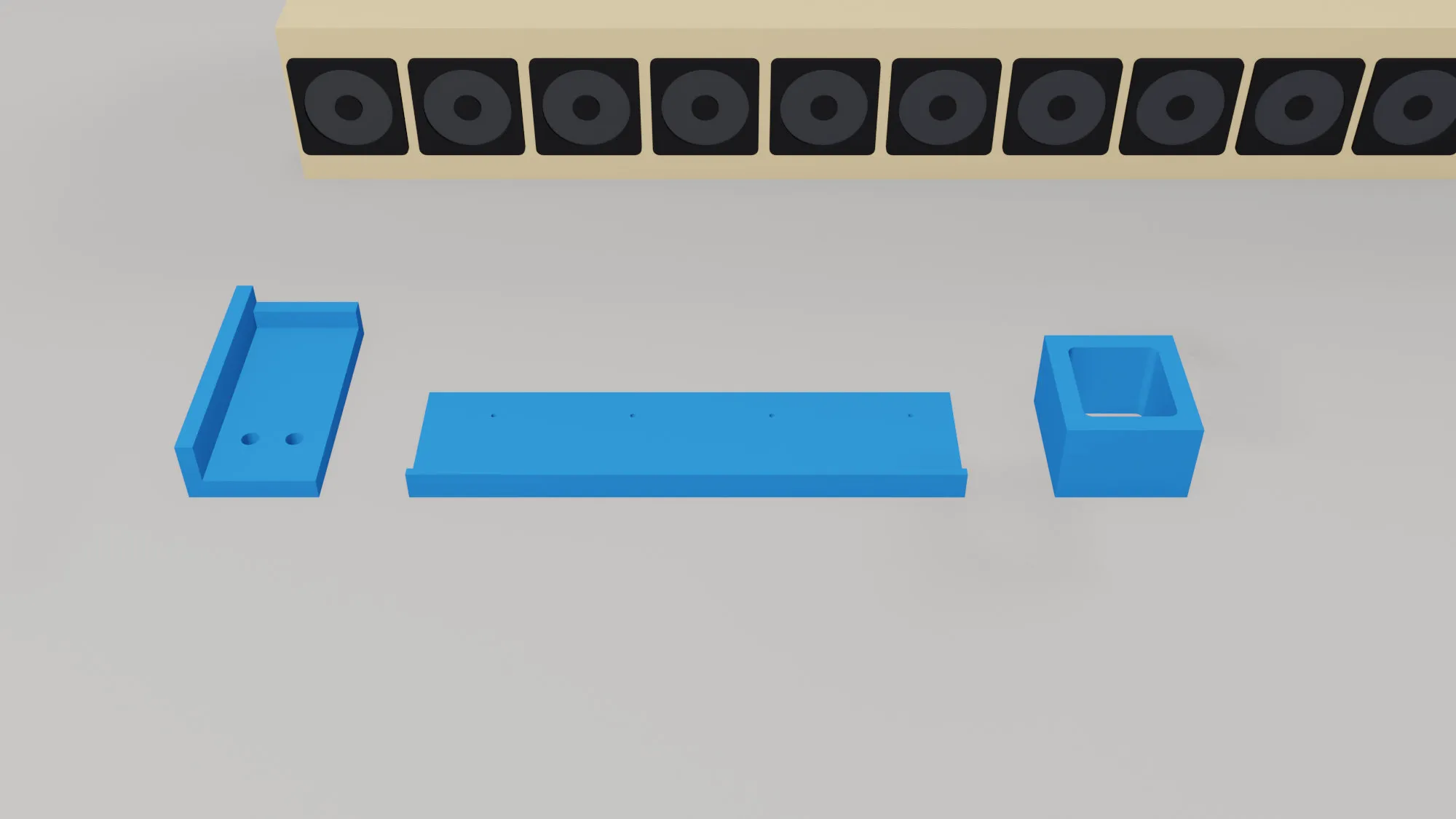
Eight modules of sixteen drivers, each module with its own sixteen-channel Dante amplifier, all played from one computer. The drivers sit 65 mm apart, which sets how high the line can rebuild a wave: up to about 2.6 kHz before it aliases. Each has its own sealed cell of about half a litre in a box of 12 mm Baltic birch, 1,040 × 94 × 164 mm, because one shared box a metre long would ring along its length.
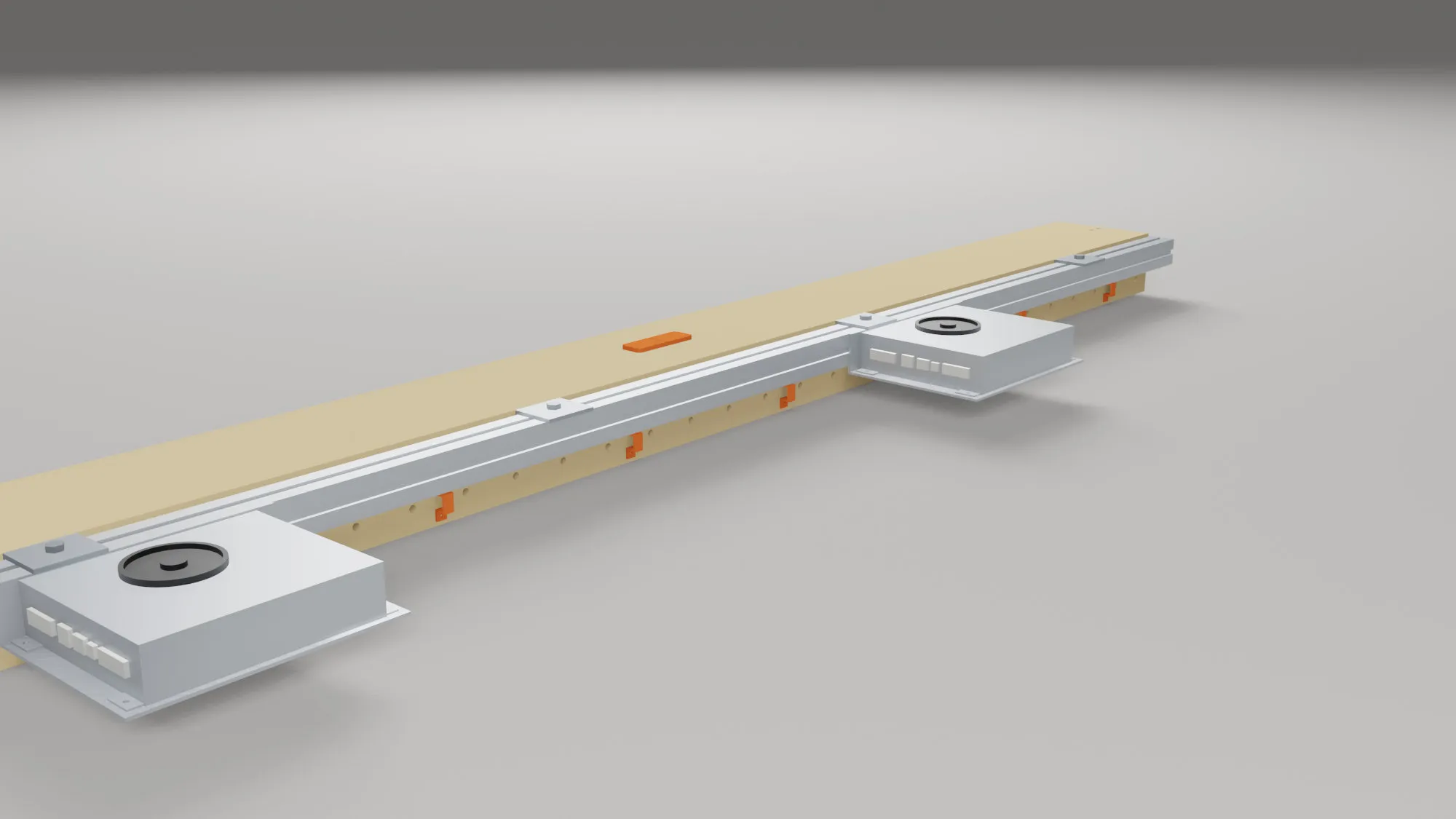
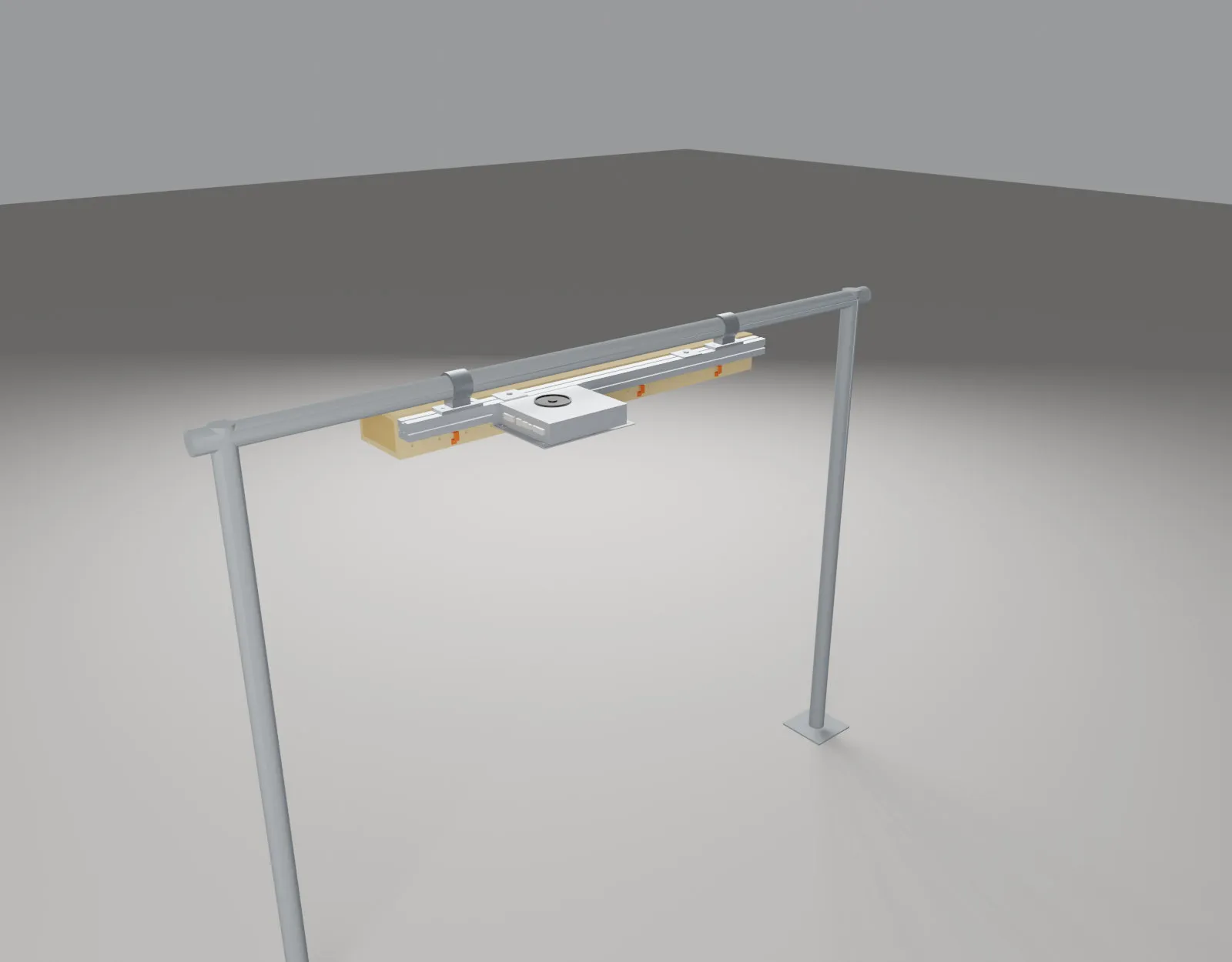
The box is routed so it slots together, the walls in grooves and the top and bottom in rebates, and is glued at the lab. A script rebuilt it from the cut files in Rhino, with every bracket and screw, and found nothing running into a cell. The amplifier hangs on edge from a plate behind the box, and a module stands on two speaker stands, shared at the joints in a line.
The amplifiers have no protection of their own, so every channel’s high-pass filter and level limit will live in the renderer, to be written in SuperCollider. The prototype counts as working when all 128 channels play from one computer, each one measured and calibrated; when point sources, plane waves and focused sources can be placed and moved over OSC; and after a listening session with at least five listeners.
In progress. The amplifiers are bought, and the first module is drawn down to the files for the router; it is not cut yet, and nothing has been measured. The first prototype, all 128 channels playing, is planned for early 2027.